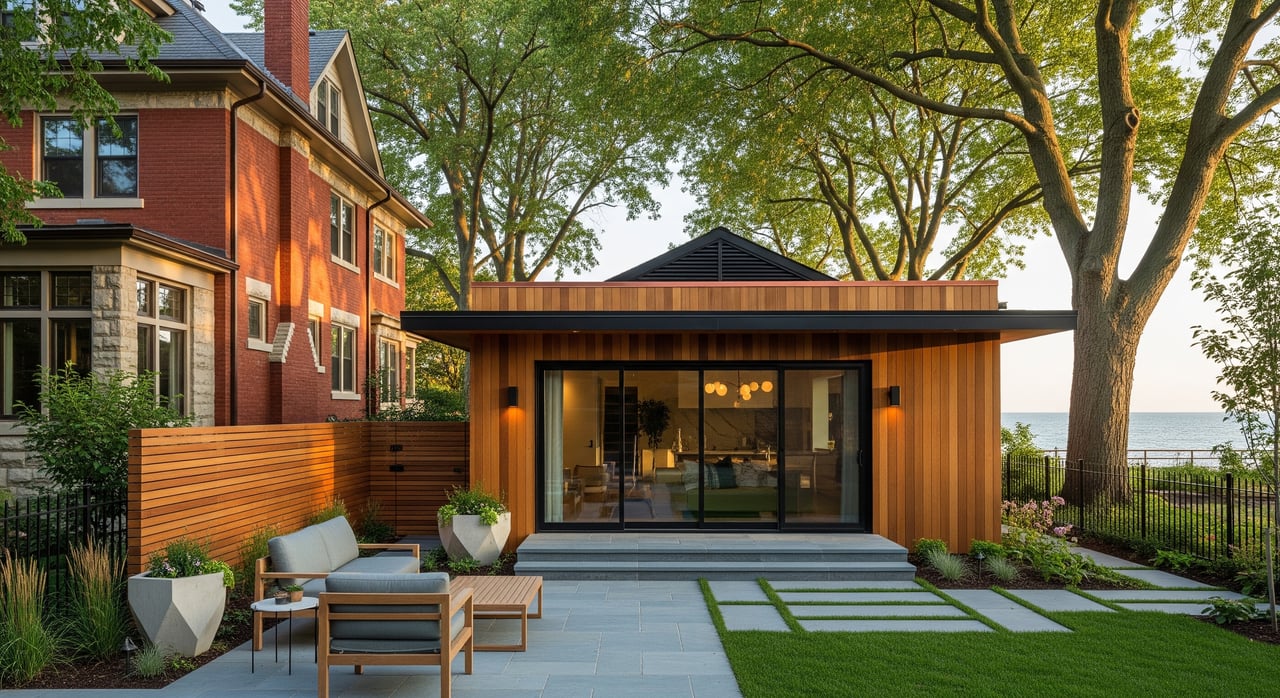
Thinking about adding a coach house or in-law suite in Evanston? You are not alone. Many homeowners want more flexible space for family, rental income, or a private office without leaving a neighborhood they love. This guide gives you a clear overview of what an accessory dwelling unit is, how Evanston’s rules may shape your options, what it might cost, and how to move from idea to approval with fewer surprises. Let’s dive in.
What an ADU is in Evanston
An accessory dwelling unit is a secondary, self-contained living space on the same lot as a primary home. It has its own kitchen, bathroom, sleeping area, and a separate entrance. In Evanston, you will also hear detached ADUs called coach houses.
ADUs can be attached to your home or built as a separate structure. They work for many situations, from multigenerational living to a long-term rental, a guest suite, or a caregiver unit. Local zoning and building codes determine where ADUs are allowed and how they must be designed and built, so your first step is to confirm requirements with the City of Evanston’s Planning and Zoning staff and the Building Division.
Historic context matters in Evanston. If your property is in a historic district or is a designated landmark, design review can affect size, placement, and materials. Access, transit proximity, and whether you have an alley can also influence parking expectations and project feasibility.
Common ADU types
- Interior conversion, such as a basement apartment or finished attic
- Garage conversion, either attached or detached
- New detached structure, often called a coach house or backyard cottage
- Above-garage apartment or an accessory unit over an existing outbuilding
How ADUs are used
- Private housing for an aging parent or adult child
- Long-term rental, subject to local rental and licensing rules
- Short-term rental, if allowed under Evanston’s rules
- Guest suite, home office, or housing for a caregiver
Quick feasibility check for your lot
Before you sketch plans, review these items to gauge what is possible on your property:
- Zoning district. Confirm your property’s zoning designation and whether ADUs or coach houses are allowed.
- Lot size and coverage. Check minimum lot area and maximum lot coverage, which can limit a detached unit.
- Setbacks and height. Side and rear yard setbacks and accessory building height caps will shape design and placement.
- Alley access and parking. Detached coach houses often rely on an alley for access and utilities. Verify parking minimums or potential waivers.
- Historic status. If your home is in a historic district or is a landmark, expect historic preservation review and possible public meetings.
- HOA and covenants. Private rules can restrict ADUs even when the City allows them.
- Utilities and capacity. Ask about water, sewer, and electric service. Separate meters and utility tap fees may be required and can affect cost.
Evanston permitting, step by step
A well-sequenced plan will save time. Here is a typical pathway many homeowners follow. Always confirm current steps with the City of Evanston.
Typical steps
- Pre-application or concept meeting with Planning staff to confirm feasibility.
- Zoning review to verify use, setbacks, height, lot coverage, and parking. Identify if a variation or special use is needed.
- Historic review if your home is in a district or individually designated. Some projects require public hearings.
- Site plan and architectural drawings that show compliance with zoning and massing.
- Building permit submission with structural, mechanical, electrical, plumbing, and life-safety plans.
- Plan review and corrections, which may take several rounds.
- Permit issuance and start of construction.
- Inspections for framing, electrical, plumbing, mechanical, and final occupancy.
- Certificate of Occupancy or final approval before anyone moves in.
Complications to plan for
- A zoning variation or special use can add time and public hearings.
- Historic Preservation review can require design changes.
- Alley easements or shared driveways can limit placement or utility runs.
- Utility tap fees and separate meters can increase costs.
- Parking requirements can trigger on-site parking or other mitigation.
Timeframes to expect
- Interior conversions with straightforward zoning can move through plan review and permits in a few weeks to a few months.
- New detached coach houses or projects that need zoning relief or historic review often take several months to a year or more. Ask the Building Division and Planning Department about current review times.
Design and technical basics
Good design starts with code basics and site realities. A quick alignment with an architect or designer familiar with Evanston will help you avoid rework later.
Size and unit standards
- Usable floor area. Some cities set a minimum size for a legal dwelling and cap ADU size relative to the main house or lot. Confirm Evanston’s numeric limits in the zoning code.
- Habitability. Building codes require minimum ceiling heights, safe emergency egress, natural light, and ventilation for habitable rooms.
- Kitchens and baths. A self-contained kitchen is generally needed for an ADU classification, along with a bathroom and living/sleeping area.
Parking and access
- Parking rules vary by district. Some places require one off-street space per ADU, allow tandem parking, or reduce parking near transit. Confirm what applies to your block.
- Alley vs frontage. Alley access can simplify parking and utility connections for a detached coach house. No alley can increase site work or limit placement options.
Utilities and systems
- Water, sewer, and electric. Detached ADUs often need new connections and may require separate meters. Plan for potential tap fees and trenching.
- HVAC. Compact systems, such as mini-split heat pumps, work well in small units and reduce ductwork.
- Stormwater. Added impervious area can trigger stormwater management requirements. Discuss this early with your designer and the City.
Costs and build times
Construction costs vary by scope, finishes, site complexity, and contractor pricing in the Chicago suburbs.
- Interior conversion, such as a basement or garage. Often ranges from the tens of thousands into the low six figures, depending on structural changes, egress, and finishes.
- Detached new construction, such as a coach house. Frequently falls in the mid six figures in higher-cost areas, with wide per-square-foot variation.
Important caveats: foundations, long utility runs, grading, and historic requirements can shift budgets. Permit and impact fees also add up. Obtain multiple local bids and include a contingency for surprises. Once permitted, interior conversions often take 2 to 4 months to build, while a new detached unit commonly takes 4 to 12 months.
Historic districts and review
If your property is in a historic district or is a landmark, design compatibility will be reviewed for massing, materials, and placement. Expect that approvals can shape height, setbacks, window patterns, and exterior finishes. Start early with concept drawings that show how the ADU respects the primary home and the streetscape.
Benefits and tradeoffs
An ADU can add flexibility and value, but it is important to view the full picture before you invest.
Popular use cases
- Multigenerational living or aging in place with privacy and proximity
- Long-term rental for recurring monthly income, subject to local rules
- Short-term rental, if permitted by Evanston’s municipal code and licensing
- Guest suite, home office, or housing for a caregiver
Benefits
- Potential rental income and longer-term return on investment
- Increased property flexibility and broader market appeal to multigenerational buyers
- More living space without moving to a larger home
- Additional housing options in the neighborhood
Drawbacks
- Upfront construction cost and a detailed permitting process
- Potential increase in property taxes when assessed value rises
- Loss of yard or green space and possible privacy impacts
- Added maintenance and management if you rent the unit
- Possible neighborhood concerns about parking or traffic
Financial and regulatory notes
- Property taxes. Improvements often increase assessed value. Contact the Cook County Assessor for information on how new space may be evaluated.
- Insurance. Adding a rental unit or new structure may require changes to your homeowner’s policy or a landlord policy. Speak with your insurer before you build.
- Lending and mortgages. An ADU can affect appraisals, underwriting, and debt ratios. Consult your lender before you finance construction.
- Rental rules and licenses. Many cities require rental registration, inspections, or business licenses for landlords. Verify Evanston’s requirements and any short-term rental rules before you advertise the unit.
- Tax and legal obligations. Income, depreciation, and local taxes can be complex. Talk with a qualified tax professional or attorney to understand your obligations.
Start your ADU conversation with the City
A short, organized message will help City staff give you clear guidance. Use this simple script when you call or email Planning and Zoning or the Building Division:
- Property address: [Your address], Evanston, IL
- Zoning district: [If known]
- Project summary: “I am exploring an accessory dwelling unit at my home. It would be [attached interior conversion, garage conversion, or new detached coach house] with approximately [square footage] and [one or two] bedrooms.”
- Access and parking: “The lot [does or does not] have an alley. Current parking is [describe].”
- Historic status: “The property [is or is not] in a historic district or a designated landmark.”
- Questions: “Can you confirm whether an ADU is permitted on my lot, what parking applies, and whether historic or zoning relief would be required? What are the next steps for a pre-application review?”
Partner with local experts
If you want the flexibility of an ADU without the guesswork, the right team matters. As long-time Evanston brokers who frequently market historic and architecturally significant homes, we understand how zoning, design, and historic review come together. We can connect you with architects, contractors, and consultants who know the local process, help you evaluate return on investment, and position your property for future resale or rental success. Our financing background also helps you choose a path that fits your goals and timelines.
Ready to explore an ADU on your Evanston property or to find a home with room to add one? Reach out to the Mabadi Group for a complimentary consultation.
FAQs
Can I build an ADU on my Evanston lot?
- It depends on your zoning district, lot size, setbacks, parking, and whether the property is historic. Contact Planning and Zoning to confirm what is allowed on your address.
Do I need separate water or electric meters for an ADU?
- Detached units often need new or separate service and may incur tap fees, while some attached conversions can share service. The Building Division and utilities can confirm what applies to your project.
Will an ADU raise my property taxes in Cook County?
- Likely yes, because adding living space can increase assessed value. Contact the Cook County Assessor to understand how improvements are valued.
How long does Evanston’s ADU permitting usually take?
- Simple interior conversions can move through in a few weeks to a few months, while detached coach houses or projects needing zoning relief or historic review can take several months to a year or more.
Can I rent my ADU short-term in Evanston?
- Short-term rental rules vary and can change. Check Evanston’s municipal code and licensing requirements before planning for short stays.
Do I need an architect for an ADU in Evanston?
- For simple interior conversions, a contractor may prepare plans, but a new detached unit or a project in a historic area benefits from an architect who knows local codes and review standards.
How much does it cost to build an ADU around Evanston?
- Interior conversions often range from the tens of thousands into the low six figures, while a new detached coach house is commonly in the mid six figures, with wide variation based on site, design, and finishes.
