Wondering whether Uptown’s vintage condo market is full of hidden charm, hidden costs, or both? If you are drawn to classic Chicago architecture but want a practical, informed path to buying, Uptown deserves a closer look. This guide will help you understand the building types, floor plans, pricing context, and due diligence steps that matter most so you can shop with more confidence. Let’s dive in.
Why Uptown Stands Out
Uptown has one of the strongest multifamily housing profiles on Chicago’s North Side. According to the latest CMAP community snapshot for Uptown, 57.1% of housing units are in buildings with 20 or more units, and only 4.0% are detached single-family homes.
That matters because if you are searching here, you are not stepping into a neighborhood defined by large private homes. You are entering a market shaped by apartment buildings, courtyard buildings, and older multifamily properties where condo ownership exists within a much larger apartment-oriented housing stock.
Uptown is also notably older than many buyers realize. The same CMAP snapshot shows that 44.7% of housing units were built before 1940, with a median year built of 1947. In simple terms, vintage is not a niche in Uptown. It is part of the neighborhood’s core identity.
What “Vintage Condo” Usually Means
In Uptown, a vintage condo often means a home in an early-20th-century brick building with original architectural character and a layout designed for city living rather than suburban sprawl. You may see hardwood floors, bay windows, decorative millwork, fireplaces, built-ins, or pocket doors, along with updated kitchens, baths, windows, and mechanical systems.
Many buyers picture a single condo style when they hear “vintage,” but Uptown offers more variety than that. Two common building categories help explain what you are likely to encounter.
Courtyard Buildings
Chicago’s classic courtyard buildings were largely built between the 1890s and the Great Depression. As the Chicago Architecture Center explains, these three- to four-story brick buildings were designed around a semi-public garden to bring more light, air, privacy, and a sense of nature into dense city living.
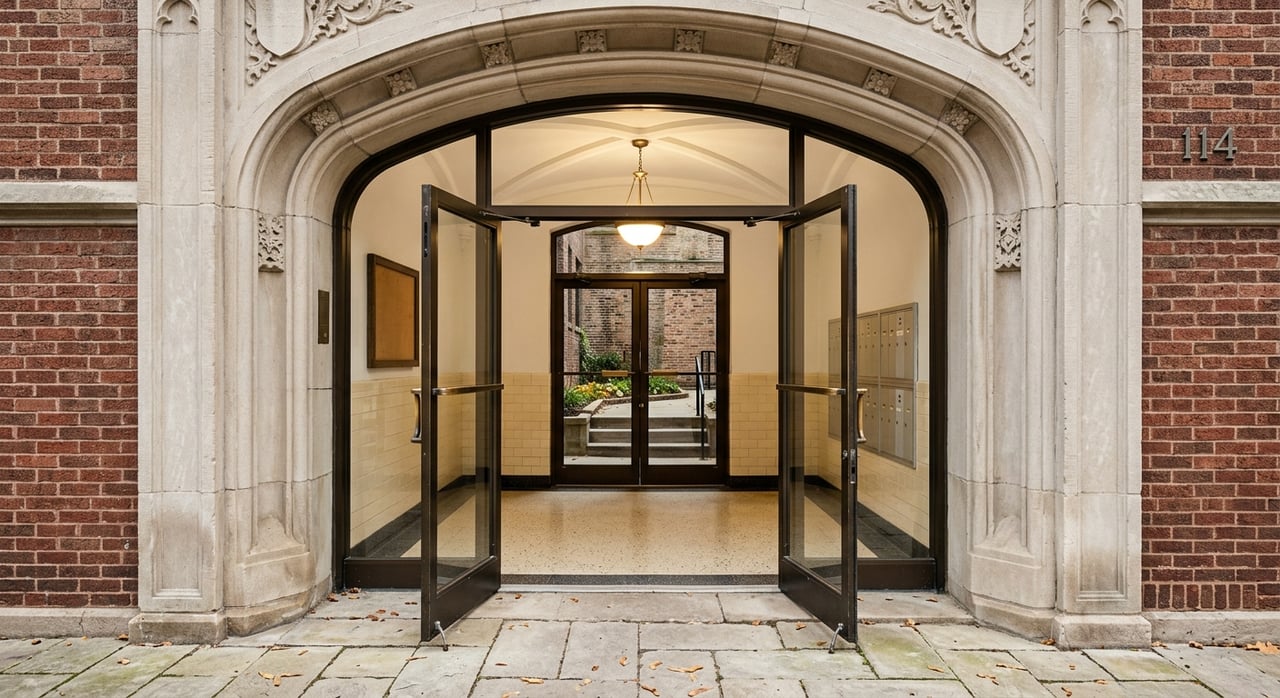
If you are shopping in Uptown, these buildings can offer some of the neighborhood’s most recognizable charm. Think formal entries, brick and limestone detailing, shared green space, and layouts that often feel efficient but visually generous.
Residential Hotels and Apartment Hotels
Uptown also includes early-20th-century residential hotels and apartment hotels. The National Park Service documentation for the Uptown Square Historic District highlights examples such as the New Lawrence Hotel and Hotel Chelsea, noting that these buildings often featured brick detailing and terra cotta and were later rehabilitated for market-rate housing, affordable housing, or condominium conversion.
For buyers, this means some condos may sit in buildings with a different original purpose than a typical apartment block. That can create distinctive architecture and interesting floor plans, but it also makes building-level due diligence especially important.
What Floor Plans Look Like
If you are hoping for oversized rooms and sprawling square footage, Uptown may feel more compact than some other markets. CMAP reports that 53.4% of homes in Uptown are 0- or 1-bedroom units, while 30.9% are 2-bedroom units, with a median of 4.1 rooms.
That said, compact does not always mean cramped. Older Chicago apartments often use design features that make rooms live larger than the numbers suggest. Bay windows can expand a living area visually, pocket doors can create flexible separation, and built-ins can improve daily function without taking up extra floor space.
In practice, many Uptown vintage condos combine original character with updated conveniences. Based on recent market examples summarized in the research, buyers commonly encounter features such as refinished hardwood floors, reworked kitchens, updated bathrooms, in-unit laundry, central air, newer windows, added storage, fireplaces, and sometimes outdoor space.
Price Point and Market Position
One reason Uptown continues to attract attention is its relative accessibility compared with higher-priced North Side markets. The exact number varies by source and method, but recent data places the neighborhood roughly in the low-to-mid $300,000s.
Redfin’s Uptown housing market data reported a February 2026 median sale price of $335,000. The research report also notes a March 2026 median listing price of $298,950 from Realtor.com and a February 28, 2026 typical home value of $311,083 from Zillow. The clearest takeaway is not the exact figure. It is that Uptown generally reads as a relatively accessible North Side market rather than a luxury one.
For many buyers, that creates an appealing entry point into ownership. If you want classic architecture, urban density, and a lower-maintenance property type, Uptown can make sense as a first purchase or as a stepping stone before a later move into a larger home.
What to Look For Beyond Charm
A beautiful vintage unit can be easy to fall for. The smarter question is whether the building has kept pace with the demands of an older structure.
In Uptown, where so much of the housing stock dates to the pre-1940 era, the condition of shared building components matters just as much as the finishes inside your unit. Roofs, masonry, plumbing, windows, elevators, and larger mechanical systems can all shape your ownership costs over time.
Assessments Tell Part of the Story
Low monthly assessments can look attractive at first glance. But in a vintage building, lower fees are not always a sign of stronger value.
Under Illinois condominium law on reserves, condo budgets adopted after July 1, 1990 must provide for reasonable reserves for capital expenditures and deferred maintenance. The law also requires disclosure if the board has waived all or part of that reserve requirement.
In practical terms, you want to know whether current assessments and reserves reflect the building’s real maintenance needs. A well-run association is not just collecting dues. It is planning ahead.
Resale Disclosures Matter
Illinois also gives buyers important rights during resale transactions. Under Illinois law covering condo resale disclosures, sellers must provide key association documents upon request, including bylaws, financial statements, reserve fund information, anticipated capital expenditures over the current or next two fiscal years, insurance details, unpaid assessments, pending litigation, and information about prior unit alterations.
The association must provide that information within 10 business days, and the standard fee is capped by statute. For you as a buyer, this disclosure package is one of the best tools for evaluating whether a vintage building is being managed with enough foresight.
A Simple Buyer Checklist
When you tour an Uptown vintage condo, it helps to separate what is cosmetic from what is structural or financial. A simple checklist can keep you focused.
- Look at the unit’s updates, including kitchen, bath, windows, cooling, and laundry.
- Ask how original features affect daily function, storage, and room flexibility.
- Review the association’s reserves and current financial statements.
- Check for anticipated capital projects over the current or next two fiscal years.
- Understand whether prior reserve requirements were waived.
- Ask about building-wide components such as roof, masonry, plumbing, elevator, and mechanical systems.
- Review the association documents carefully before final commitment.
Why Uptown Appeals to Certain Buyers
Uptown is not one-size-fits-all, and that is part of its appeal. For buyers who value architectural character, a walkable urban setting, and a more manageable point of entry into ownership, the neighborhood offers a strong mix of history and practicality.
The research also suggests a lifestyle fit for buyers who do not need a large detached home right away. Uptown has high transit use, a large share of no-vehicle households, and a housing stock dominated by smaller multifamily homes, which can make it a practical choice for a lower-maintenance first purchase and a longer-term stepping stone.
Making a Smart Vintage Condo Decision
The best Uptown condo purchases usually balance emotion with discipline. You want the details that make a home memorable, but you also want clear eyes on the building’s finances, maintenance planning, and longer-term ownership costs.
That is where local perspective matters. When you understand how Uptown’s older building stock, compact layouts, and condo governance all intersect, you can make a more confident decision and avoid confusing charm with value.
If you are weighing a vintage condo purchase and want a thoughtful, high-touch perspective on how it fits into your bigger real estate goals, the Mabadi Group would be glad to help you think it through.
FAQs
What defines a vintage condo in Uptown Chicago?
- In Uptown, a vintage condo usually refers to a home in an older multifamily building, often built before 1940 or in the early to mid-20th century, with original architectural details and updated modern systems or finishes.
What are the most common condo building types in Uptown?
- Buyers in Uptown often encounter classic Chicago courtyard buildings as well as former residential hotels or apartment hotels that were later converted or rehabilitated for residential ownership.
What size condos are most common in Uptown?
- According to CMAP data, Uptown is dominated by 0- or 1-bedroom units and 2-bedroom units, with a median of 4.1 rooms, so layouts are often efficient rather than oversized.
What price range should buyers expect in Uptown’s condo market?
- Recent data in the research report places Uptown roughly in the low-to-mid $300,000s, making it a relatively accessible North Side market rather than a luxury market.
What should buyers review before purchasing a vintage condo in Uptown?
- You should review the condo association’s financial statements, reserve fund status, anticipated capital expenditures, insurance information, unpaid assessments, pending litigation, and building-level maintenance needs before moving forward.
