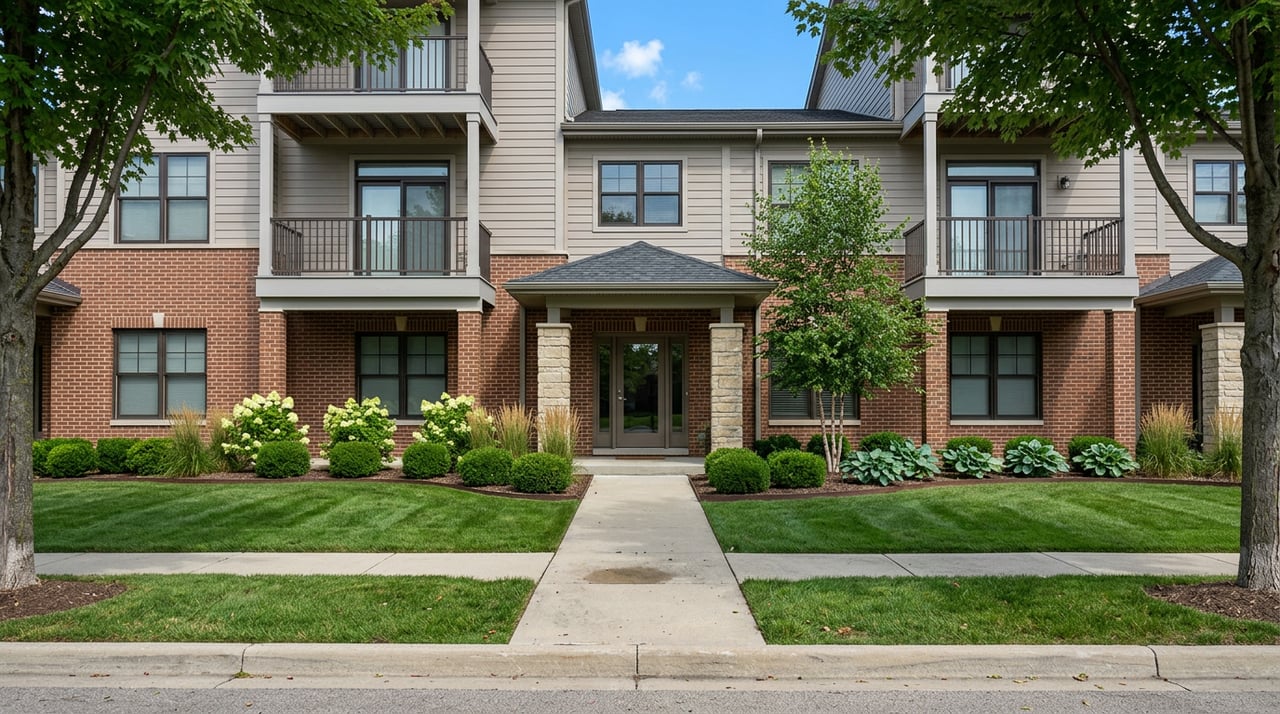
Want weekends back and chores off your plate? If you travel often, work long hours, or you are ready to downsize, Lincolnshire offers the kind of low-upkeep homes and easy access that make life simpler. You get convenient shopping and dining, nearby highway and Metra access, and a range of housing options where exterior work is handled for you. In this guide, you will learn where low-maintenance living shines in Lincolnshire, how local conveniences support a lock-and-leave lifestyle, and exactly how to review HOA and condo documents in Illinois before you buy. Let’s dive in.
Why Lincolnshire fits low-maintenance life
Lincolnshire sits in Lake County with quick connections to the region. The village highlights direct access to I-94, about 32 miles to the Loop and roughly 17 miles to O’Hare, plus nearby Metra North Central Service stations in Prairie View, Vernon Hills and Buffalo Grove. These links make it easy to lock the door and go when work or travel calls. You can confirm routes and amenities on the village’s community page for transport and area access.
Daily errands are simple. CityPark and Lincolnshire Commons bring restaurants, a movie theater, and services close to home, so you spend less time driving for basics. CityPark’s mixed-use center underscores how lifestyle and convenience align with attached living in the village’s core, as seen in this commercial listing overview.
Housing options with less upkeep
Condominiums
Condos offer true walls-in living with common areas and exterior elements handled by the association. This setup suits frequent travelers, busy professionals, and downsizers who want a secure building, garage or assigned parking, and on-site maintenance. For a clear overview of condo ownership tradeoffs and responsibilities, review NAR’s condominium basics.
Townhomes and fee-simple attached
Townhome communities in Lincolnshire often include exterior maintenance, landscaping and snow removal through an association, while still giving you private entries, attached garages, and more interior space. This blend works well if you want the feel of a small home without yard work. Always verify what the association covers in writing, since responsibilities vary by development.
Gated and amenity-rich communities
Established Lincolnshire communities such as Rivershire and Village Green have historically offered maintenance services, gated entries, and amenities like pools, tennis, and fitness. These can be a strong fit if you value convenience, secure access, and resort-style features near the village’s retail core. Ask for the association’s rules, amenity fee structure, and any rental or pet policies before you commit.
Life-plan and age-qualified options
If you want maximum convenience with hospitality-style services, a life-plan community delivers an even more streamlined lifestyle. Lincolnshire’s Sedgebrook campus provides independent living with dining, housekeeping, transportation and on-site healthcare, designed for residents who want maintenance fully handled and continuity of care on one campus. Explore services directly with Sedgebrook’s program details.
What “low-maintenance” usually includes
In many Lincolnshire condo and townhome communities, you will commonly find:
- Landscaping and snow removal included
- Exterior repair and replacement handled by the association
- Secure entries or gated access, plus garage or assigned parking
- On-site or contracted property management
- Amenities like fitness rooms, pools, or walking paths
- A master insurance policy that covers common elements and the building envelope
Your out-of-pocket responsibility depends on your building’s master policy type. Some master policies are bare walls, while others are walls-in or all-in, which changes how much HO-6 coverage you need. Review master policy basics in this condo insurance explainer and confirm your coverage with a licensed insurance agent.
Commute and travel made simple
If you commute or travel, Lincolnshire helps you move quickly. I-94 is minutes from most addresses, and the Metra North Central Service connects nearby stations to Chicago’s Union Station on weekdays. The village also notes a typical sub-30-minute trip to O’Hare in normal traffic. Find local transportation details on Lincolnshire’s amenities and community access page. Schedules and drive times change, so check current timetables and traffic conditions before you go.
Costs to plan for: dues, taxes, assessments
Association dues vary by building, unit size, and amenity package. In addition to monthly dues, plan for potential special assessments for capital projects, especially in older buildings. A well-funded reserve significantly reduces surprise costs. CAI, the national community associations group, recently highlighted updated reserve study standards that underscore the importance of long-term funding. Review their guidance on reserve study standards.
Property taxes in Lincolnshire tend to exceed the U.S. median. Effective tax rates commonly fall in the roughly 2.5 to 2.9 percent range, with median annual bills often in the low-to-mid five figures on median home values. Use parcel-level county data for accuracy and review local trends via Ownwell’s Lincolnshire tax snapshot.
How to vet an HOA or condo in Illinois
A careful document review helps you choose a low-maintenance home that stays low maintenance. Build your file early and ask for the following.
Core documents to request
- Governing documents: Declaration, Articles of Incorporation, Bylaws, and Rules and Regulations. See a plain-language overview in NAR’s condo topic hub.
- Association financials: current budget, 2 to 3 years of financial statements, accounts receivable aging, and any association loans.
- Reserve study and funding plan: ask for the latest study, component list, and the reserve funded percentage. Learn why reserves matter in CAI’s reserve study standards.
- Board meeting minutes: last 12 to 24 months to spot recurring issues or pending projects.
- Insurance declarations: master policy type and limits, evidence of D&O and fidelity coverage.
- Vendor and management agreements: landscaping, snow, elevator, and management contracts.
- Litigation disclosures: any active claims or disputes.
Top red flags to watch
- Underfunded reserves or an outdated reserve study
- High owner delinquencies or repeated special assessments
- Rapid insurance premium spikes or frequent carrier changes
- Ongoing litigation that could affect budgets or financing
Financing checks to run early
Your lender may need to confirm project eligibility for FHA, VA, or conventional programs. If a condo project is not certified or does not meet guidelines, financing choices can narrow. You can search the FHA condominium database to check current status on HUD’s site. Ask your lender about Fannie Mae or Freddie Mac project review early in the process.
Insurance must-knows for condo buyers
- Get the association’s insurance declarations page and identify the policy type.
- If the building is bare walls, you will need more HO-6 dwelling coverage.
- Ask whether flood or sewer backup coverage is included or excluded.
- Confirm loss-assessment coverage on your HO-6 policy with your insurance agent. A gap can turn a minor claim into a major out-of-pocket cost. Find a helpful primer in this condo insurance guide.
Illinois legal notes
Illinois has updated pieces of the Condominium Property Act that affect association powers and procedures. Recent amendments include new requirements related to rights of first refusal and accessible parking policies that associations must follow. For an overview of changes taking effect in 2025, review this summary of the Illinois Condominium Property Act amendments. For legal interpretation, consult an Illinois condominium attorney.
Quick buyer checklist
Use this short list to stay organized as you compare Lincolnshire options:
- Request: current budget, last 2 to 3 years of financials, reserve study and component schedule, 12 to 24 months of minutes, insurance declarations, management agreement, AR aging, litigation disclosures, and a unit-responsibility matrix.
- Review: reserve funded percentage, upcoming capital projects, insurance scope and deductibles, recent special assessments, rental and pet policies, parking and storage assignments, and any amenity fees.
- Verify: project eligibility for your loan type and the building’s master policy details.
- Consult: a local buyer’s agent experienced with HOA properties, an Illinois condo attorney, a licensed insurance agent, a lender familiar with condo warrantability, and an inspector or engineer for older buildings.
Finding your fit in Lincolnshire
If you want a lock-and-leave lifestyle near Chicago with thoughtful amenities, Lincolnshire is worth a close look. You will find condo buildings with heated parking, townhome communities where snow and landscaping are handled, and established gated enclaves close to dining and entertainment. Pair those benefits with smart due diligence on reserves, insurance, and rules, and you will land a low-maintenance home that truly frees your time.
If you would like tailored guidance on Lincolnshire and the North Shore, reach out to the Mabadi Group for a complimentary market consultation. Our team can help you pinpoint the right communities, review HOA materials, and structure a financing path that fits your goals.
FAQs
What makes Lincolnshire good for lock-and-leave buyers?
- You get quick I-94 access, nearby Metra North Central Service stations, and convenient retail at CityPark and Lincolnshire Commons, which simplifies commuting and daily errands.
Which Lincolnshire homes are most low maintenance?
- Condos, townhomes with exterior services included, and gated or amenity-focused communities tend to minimize upkeep; verify each association’s coverage and rules.
How do I check if a condo is FHA eligible?
- Search the project on HUD’s condominium database to see approval status and expiration dates, then confirm details with your lender.
What HOA documents should I review before making an offer?
- Ask for the governing documents, current budget and recent financials, reserve study, board minutes, insurance declarations, vendor contracts, and any litigation disclosures.
How do reserves and special assessments affect my costs?
- Strong reserves reduce the odds of extra owner charges for big projects; underfunded reserves often lead to special assessments that raise your total housing cost.
What insurance does a condo owner need beyond the master policy?
- Most buyers need an HO-6 policy that covers interior finishes, personal property, liability, loss assessment, and any gaps not covered by the master policy.
