Choosing between Andersonville and Evanston is not just about square footage or commute times. It is about how you want your day to feel when you step outside, where you spend your weekends, and what kind of home fits your next chapter. If you are weighing these two north lakefront options, this guide will help you compare housing, transit, shopping, dining, and lake access so you can decide which lifestyle fits you best. Let’s dive in.
Andersonville vs. Evanston at a Glance
Both places offer strong local identity, walkability, and access to the lakefront region of Chicagoland. But they live very differently day to day.
Andersonville is a Chicago neighborhood centered around Clark Street, known for historic character, independent businesses, and a strong neighborhood feel. The Andersonville Chamber materials describe it as the shop-local capital of Chicago, with more than 430 businesses and a long-running calendar of local events.
Evanston is its own city on Lake Michigan, just north of Chicago. According to the City of Evanston, it offers nine business districts, six public beaches, a broad retail and arts mix, and a civic identity shaped in part by its shoreline and Northwestern University.
Daily Feel and Neighborhood Identity
Andersonville feels like a main street neighborhood
If you want a close-knit city neighborhood with a strong business corridor, Andersonville stands out. Much of its appeal centers on Clark Street, where local shops, restaurants, bars, and services create a highly walkable routine.
The neighborhood also has a distinctive cultural identity. The Chamber highlights Andersonville’s Swedish roots, historic architecture, and signature events such as Midsommarfest and the farmers market, which reinforce a strong sense of place.
Evanston feels like a lakefront city
Evanston offers a broader civic footprint. Instead of one defining corridor, it has multiple business districts, including Downtown Evanston, the Main-Dempster Mile, and Central Street, each with its own retail and dining mix.
That means your experience can vary depending on where you live. Some areas feel more urban and transit-connected, while others feel more residential and shoreline-oriented, but the city’s lakefront identity remains central throughout.
Housing Stock and Home Style
Andersonville leans vintage and low-rise
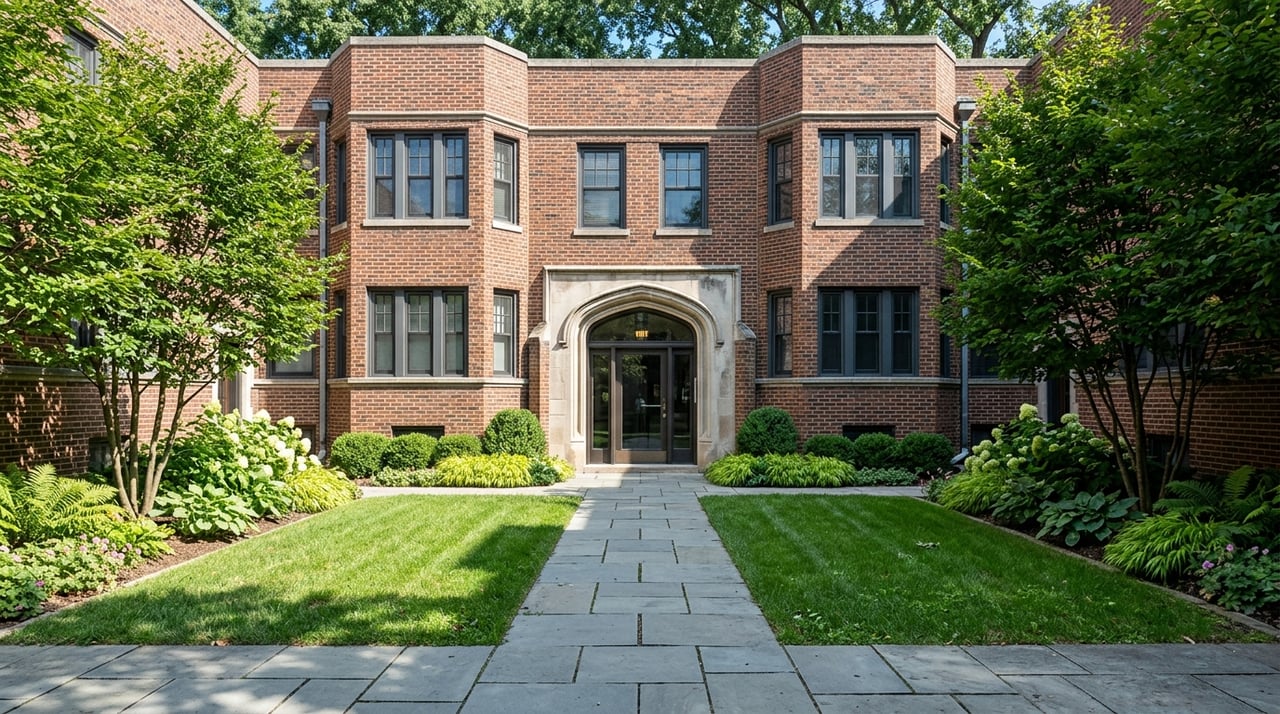
If you are drawn to classic Chicago housing, Andersonville may feel like a natural fit. Homes.com’s neighborhood profile points to brick two-flats, greystone townhouses, condos, and multi-unit apartment buildings as core parts of the housing mix.
In practical terms, that often appeals to buyers who value vintage detail, low-rise living, and a more urban housing pattern. If your vision includes character over scale, Andersonville likely belongs on your shortlist.
Evanston offers a broader housing mix
Evanston gives you more variety across price points and property types. City housing materials describe an older, dense housing market with many single-family homes built between the 1860s and 1930s, along with large apartment buildings built mainly in the 1920s.
That mix can work well if you are looking for a detached home, condo options, or a larger move-up purchase. For buyers who want more flexibility in home type, Evanston generally offers a wider lane.
Transit and Commuting Options
Andersonville supports a car-light lifestyle
For a Chicago neighborhood, Andersonville offers strong transit access. The CTA’s Red Line modernization updates note that the Argyle, Berwyn, and Bryn Mawr stations reopened on July 20, 2025 with elevators, escalators, wider platforms, and other accessibility upgrades.
Metra’s UP-N line in nearby Ravenswood adds another commuting option. For many buyers, that means you can build a routine that relies less on a car while still staying well connected to downtown Chicago.
Evanston has more transit redundancy
If transit choice matters a lot to you, Evanston has the edge. The CTA Purple Line runs through Evanston to Howard, with weekday rush-hour express service to the Loop, and the city lists seven Purple Line stops within Evanston.
Metra’s UP-N line also serves Main Street, Davis Street, and Central Street. Compared with Andersonville, Evanston simply gives you more stations and more backup options if transit access is a major part of your decision.
Shopping, Dining, and Culture
Andersonville is built around local businesses
Andersonville’s commercial identity is one of its biggest draws. The Chamber guide describes a district packed with independent businesses, restaurants, bars, and service providers, making everyday errands and spontaneous outings easy to fold into your routine.
That concentration gives the neighborhood a self-contained feel. If you like the idea of walking out your door and spending most of your free time along one lively business corridor, Andersonville does that especially well.
Evanston offers several distinct districts
Evanston’s advantage is range. The city describes Downtown Evanston as having its most diverse retail mix and more than 60 restaurants, while the Main-Dempster Mile offers a walkable dining-and-shopping district and Central Street features independent stores and cafes.
The city also highlights the Noyes Cultural Arts Center as a hub for more than 30 artists and organizations. If you want multiple commercial districts and a wider geographic spread of activity, Evanston gives you more variety.
Lakefront Access and Outdoor Time
Andersonville keeps the lake nearby
Andersonville is close to the water, but the lake is not the neighborhood’s defining feature. For beach access, many residents look to nearby Edgewater, where the Chicago Park District’s Osterman Beach offers a convenient option near Bryn Mawr.
That setup can work well if you want occasional lake time without making the shoreline central to your daily lifestyle. You get access, but the neighborhood rhythm still revolves more around its streets and businesses.
Evanston puts the lake front and center
Evanston is the stronger choice if direct shoreline living is high on your list. The city states that it sits on Lake Michigan and has six public swimming beaches: Lighthouse, Clark Street, Lee Street, Greenwood Street, South Boulevard, and Lincoln Street Beach.
That changes the feel of daily life. In Evanston, the lake is not just nearby. It is part of the city’s identity and a regular backdrop for recreation, walking, and downtime.
Which Buyers Often Prefer Each One?
Andersonville may suit you if you want
- A Chicago neighborhood setting
- Vintage condos, two-flats, or low-rise housing
- A strong local business corridor
- A neighborhood feel centered on walkability and independent shops
- Easy access to city transit without needing a full lakefront lifestyle
Evanston may suit you if you want
- A separate lakefront city with more housing variety
- More detached-home inventory and larger-home options
- Multiple business districts instead of one main corridor
- Stronger transit redundancy through both CTA and Metra
- Direct access to Lake Michigan beaches as part of everyday life
A Simple Way to Decide
If your priority is a character-rich Chicago neighborhood with a strong main street, Andersonville is hard to beat. If your priority is broader housing choice, more direct lakefront living, and a city with multiple distinct districts, Evanston may be the better fit.
For many buyers, this decision becomes clearest when you line up your top three needs. Think about your preferred home style, how often you want to use transit, and whether the lake should be an occasional amenity or a central part of your routine.
If you are comparing Andersonville and Evanston and want guidance tailored to your move, Mabadi Group can help you evaluate the housing options, lifestyle tradeoffs, and timing with a clear local perspective.
FAQs
Is Andersonville or Evanston better for vintage condos and low-rise housing?
- Andersonville is more closely associated with brick two-flats, greystones, condos, and other low-rise multi-unit housing, based on the neighborhood profile in the research.
Is Evanston or Andersonville better for detached homes?
- Evanston generally offers more detached-home inventory because city housing materials describe a substantial single-family housing stock alongside older apartment buildings.
Does Evanston or Andersonville have better public transit options?
- Evanston has more transit redundancy because it combines multiple Purple Line stops with three Metra UP-N stations, while Andersonville relies more on nearby Red Line access and Ravenswood Metra service.
Is Andersonville directly on Lake Michigan like Evanston?
- No. Andersonville has nearby beach access, including Osterman Beach in Edgewater, but Evanston is more directly tied to the shoreline and has six public beaches.
Does Andersonville or Evanston have a stronger main street feel?
- Andersonville is more defined by a single main street atmosphere, with Clark Street serving as the core of its shopping, dining, and event life.
